
Parsing Meta Compute.
Infrastructure isn’t a Meta product. It’s a Meta asset.

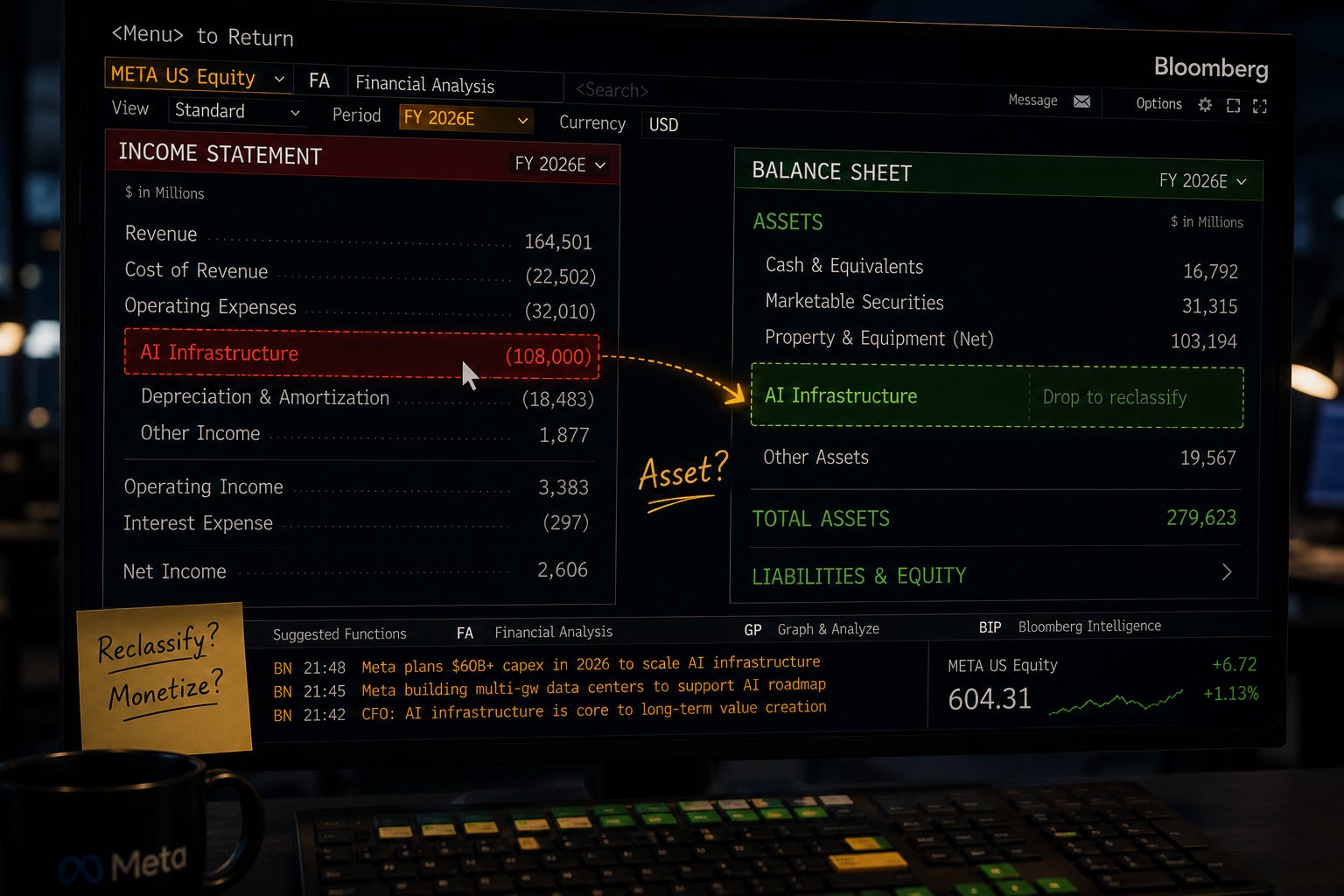
Meta Compute is a story about the financialization of compute — i.e., Meta using its AI infra as productive capital rather than a cost center. The neocloud competitive implications are real albeit overblown. But investors focusing on how this could impact neoclouds are missing the emergence of the most important new asset class: compute.
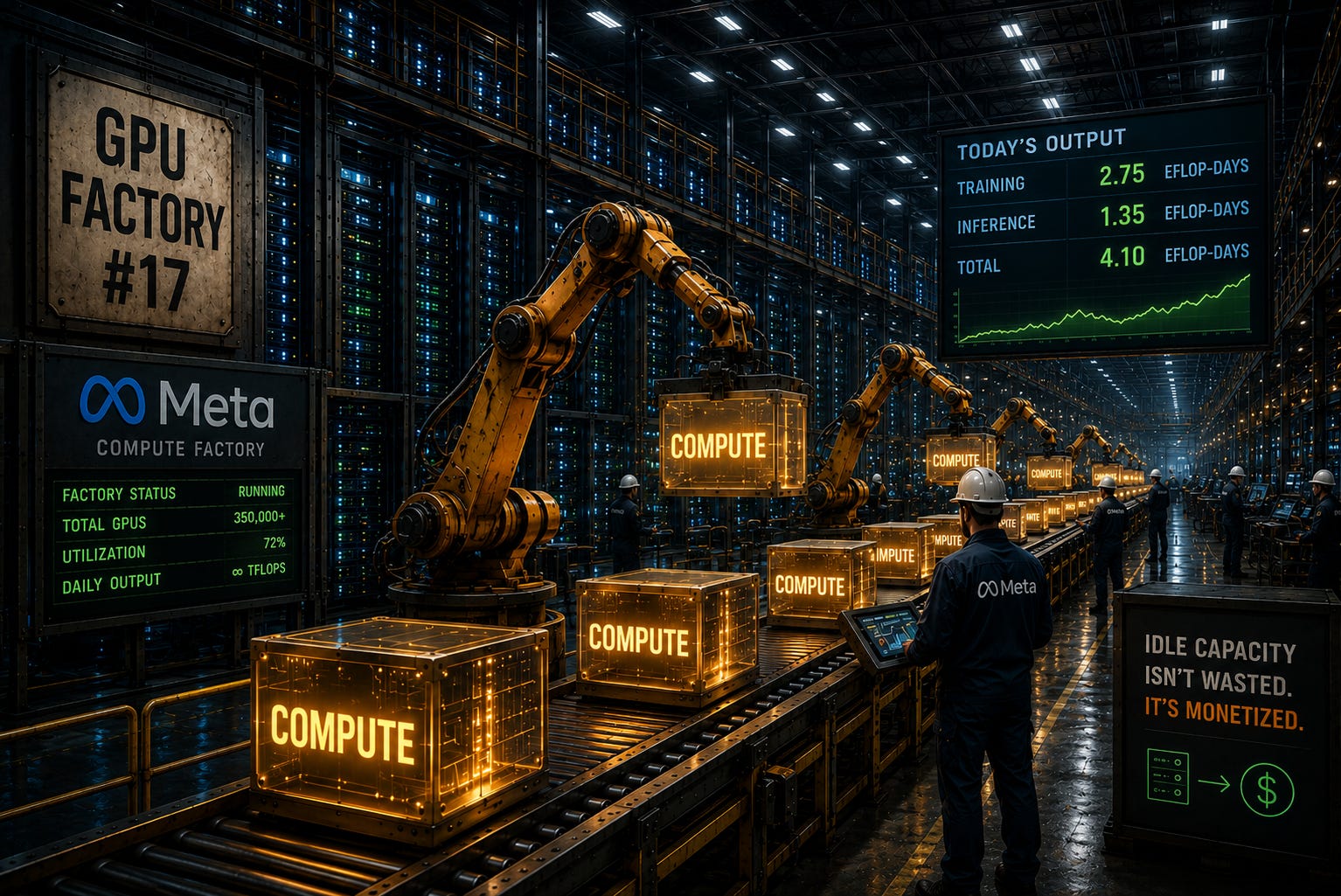
Last week, reports surfaced that Meta is planning to rent AI compute through a newly minted Meta Compute unit. Of course CoreWeave, Nebius et al got pummeled as investors shit their pants about a new mega competitor and existing and future Meta neocloud contracts.
Possible? Of course. Market overreaction? Probably.
But before jumping to either conclusion, let’s travel back to 2013 when Facebook (as it was called then) acquired Parse — and one (unnamed) AWS startup BD manager nearly shit his pants. (Spoiler alert: that was me.)
Facebook ❤️ Parse.
In 2013, Facebook spent ~$85M to buy Parse, which was one of the hottest startup developer platforms — a Backend-as-Service that gave mobile devs database, auth, APIs, push notifications, storage, and cloud code and let them eschew building or managing any infrastructure. It powered ~100K apps then and >500K a year later. It was Facebook’s Trojan horse to entice developers to integrate Facebook Login and Analytics to feed data back into its ad-targeting machine.

By the time I joined AWS in 2014, Facebook’s Parse lurked around developer circles waiting to feast on our startup lunch. Most scary (and valuable) was Parse’s relationship with developers. Our team’s MO was to own that startup relationship early because we knew that “today’s” startups are tomorrow’s enterprises.
Long before STAX (the startup signal tracker from Porch Capital), I was obsessed with startup adoption predicting enterprise adoption. If Facebook became the default platform for startups, who knew where that could eventually lead?
As it turned out… nowhere.
Facebook 💔 Parse.
In 2016, Facebook announced it was shutting down Parse — presumably to focus on its core advertising business and avoid a capital intensive battle for infra marketshare. (Anecdotally, the Parse shutdown presented an opportunity for us at AWS to pick up all of those soon-to-be infra homeless startups. Seems like “most” went to Google’s Firebase.)

Parse reminds us that just because a company can build infrastructure doesn’t mean it wants infrastructure to become its business. Which brings us back to Meta Compute. The debate isn’t whether Meta can compete with CoreWeave. Of course it can.
The question is whether Meta Compute is the beginning of a serious cloud business — or “simply” a way to generate incremental returns on an AI infrastructure investment that already measures in the hundreds of billions of dollars.
Infrastructure isn’t Meta’s product. It’s an asset.
AWS and CoreWeave wake up every morning trying to acquire compute customers. Meta wakes up every morning trying to build the best AI products in the world (and trying to sell a few ads based on our most personal and scintillating information). That’s an important distinction.
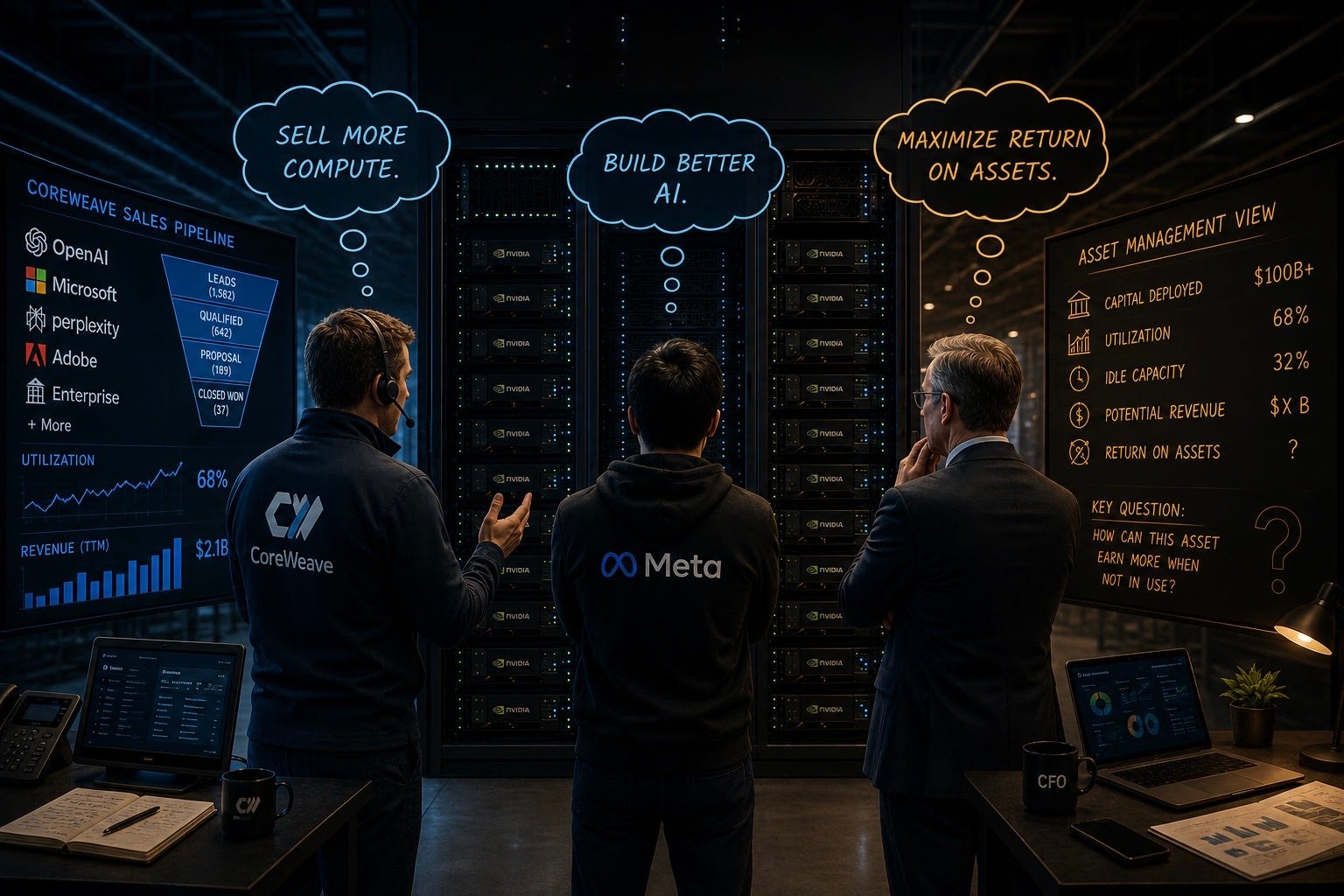
The SemiAnalysis team published an excellent deep dive on what Meta Compute could become. I recommend reading it and I largely agree with their conclusion that Meta’s expanding AI infrastructure ambitions include both building and buying infra capacity.
But if you’re spending >$100B a year building AI infrastructure, a natural capital allocation question is whether this asset can generate returns when it’s not in use.
Meta isn’t the first to ask this question. SpaceX is monetizing excess AI infrastructure. Enterprises are discussing how to lease idle GPU capacity. SF Compute exists because companies overbuy compute and then need a marketplace to sell or sublease it. If plenty of companies are already doing these distributing networks of idle compute, maybe Meta Compute is simply the largest expression of that trend yet.
The biggest change now, however, is this:
Owning GPUs used to be a cost. Increasingly, it’s an income-producing asset.
Compute is capital.
I’ve written about the financialization of compute. Not because GPUs suddenly became valuable — at ~$50K per Nvidia GB300 chip that’s hardly a debate — but because compute output is becoming something that can be bought, sold, reserved, financed, subleased, and monetized across a growing ecosystem.
Once you stop thinking of GPUs as (costly) hardware and start thinking of them as factories producing compute, a very different world begins to materialize.
Infrastructure can generate income.
Future compute production can be sold forward.
Idle capacity can be leased.
Compute credits can become a medium of exchange between partners.
Long-term compute contracts can support financing.
Marketplaces can match buyers and sellers.
AI capital allocation, From the Porch.
Maybe Meta Compute becomes a major cloud business. Maybe it doesn’t. Frankly, that’s almost beside the point. I think investors should fret less about whether Meta is “becoming CoreWeave” (it’s not) and focus more attention to the broader shift underneath.
We’re watching AI infrastructure evolve from a cost center into productive capital. And once that happens, monetizing compute is just good capital allocation.
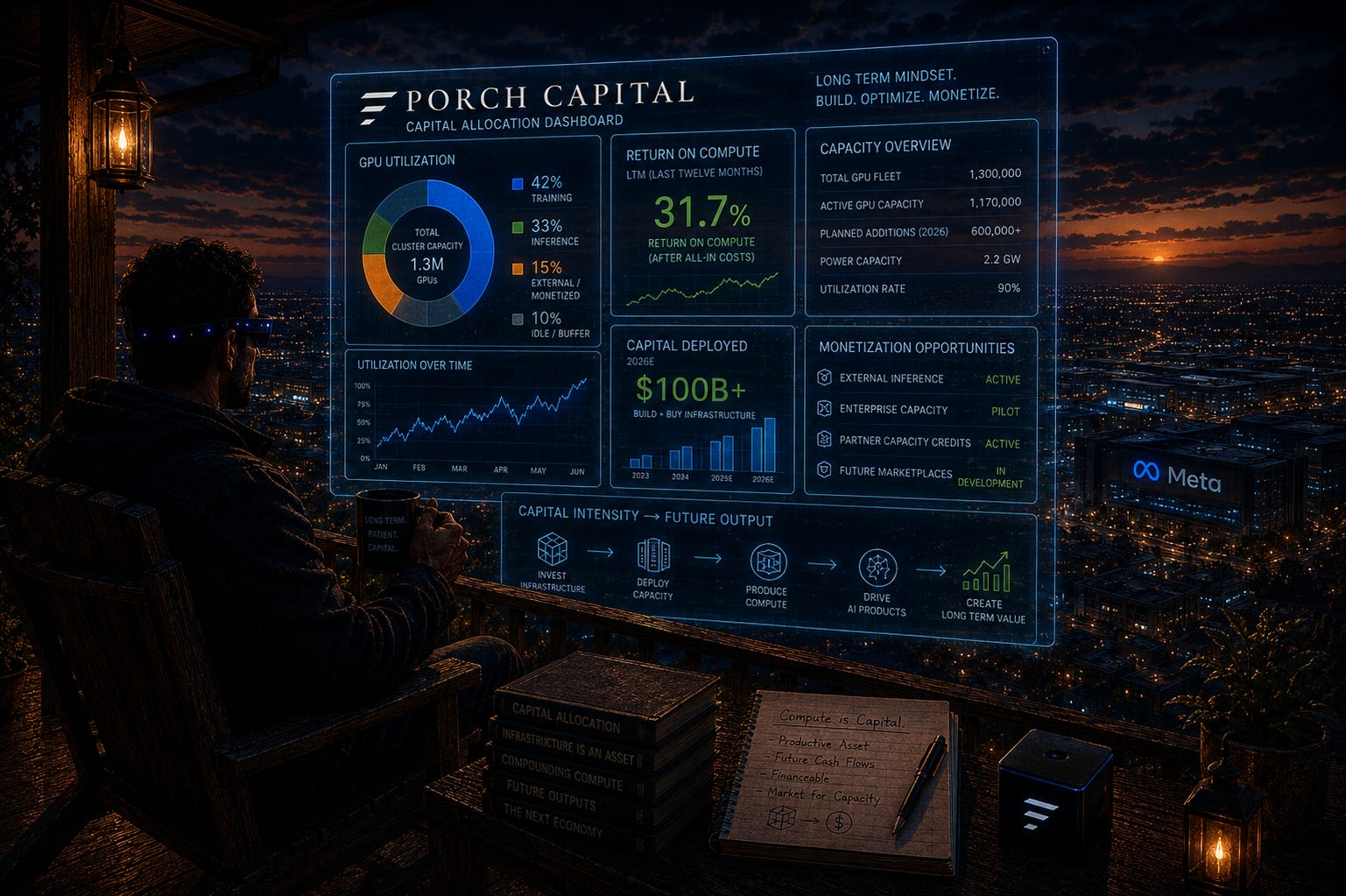
And the companies that own the next generation of AI infrastructure may discover they’re operating factories that produce one of the world’s newest financial assets: compute.
Disclosures: I often invest behind the themes I write about. As of publication I’m long CoreWeave (CRWV), Nebius (NBIS), and Nvidia (NVDA), and hold Crusoe Energy via an SPV. I may add to, trim, or exit any of these without notice and won’t update this post when I do. Nothing here is investment advice or a solicitation — do your own work.